

ai+ robotics
A summit on how the United States can translate world-class advances in AI and robotics into industrial capacity and deploy intelligent machines at scale.
Why this moment matters
The next era of technological leadership will belong to the nations that can turn artificial intelligence into industrial power: embedding intelligence in machines that sense and act in the physical world, then manufacturing those systems at scale and deploying them throughout the production base.
In 2024, China installed 295,000 industrial robots — 54 percent of the global total — compared with 34,200 in the United States. Its operational stock is now more than five times larger.
The manufacturing sector faces massive workforce shortages, with up to 1.9 million manufacturing jobs projected to go unfilled by 2033. Robotics can close those gaps while creating demand for new technical skills and promoting America’s reindustrialization.
America holds the advantages this moment requires: frontier research, deep capital, regional manufacturing, and skilled workers. They will not organize themselves, and the window to convert them into industrial leadership will not stay open.
How can the United States convert its lead in AI models into leadership in robotics?
What manufacturing capacity, workforce investments, capital, and supply chains are required to deploy robotics at scale?
One day, model to machine
Draft Agenda v4. All times Eastern. Session titles, times, and speakers are subject to change.
Morning & midday
9:30 AM – 1:15 PM-
–
Opening Remarks
- Ylli Bajraktari, SCSP
-
–
Video Welcome from Commission Co-Chairs
- Senator Ted Budd (R-NC)
- Senator Elissa Slotkin (D-MI)
-
–Panel
The Deployment Moat: World-Class AI to Industrial Power
- Sophie Shulman, NVIDIA
- Jenn Wall, Intrinsic
- Pras Velagapudi, Agility Robotics
- Moderator: Jeanne Meserve, NatSec Tech Podcast
-
–
Tech Demo
- Mike Cicco, FANUC America
-
–Panel
From Pilot to Scale: Trust, Return, Readiness
- Dr. Chinedum Okwudire, University of Michigan
- Evan Beard, Standard Bots
- Berardino Baratta, MxD
- Moderator: Jeff Burnstein, A3
-
–Panel
Trusted Scale: Security, Standards, & China Challenge
- Brendan Schulman, Boston Dynamics
- Michael Robbins, Semiconductor Industry Association
- Dr. Craig Schlenoff, NIST
- Moderator: David Lin, SCSP
-
–Tech Demo
Making Human-like Action Possible
- Tairan Wang, Sangtera
-
–
Fireside Chat
- Erik Ekudden, Ericsson
- Moderator: Martijn Rasser, SCSP
-
–
Lunch
-
–
The Hill’s Robotics Agenda
- Grace Kim, Office of U.S. Senator Elissa Slotkin
- Charlie Micek, Office of U.S. Congressman Bob Latta
- Moderator: Tony Samp, DLA Piper
Afternoon
1:15 PM – 4:45 PM-
–Tech Demo
What made LLMs great, and why physical AI for manufacturing needs a different approach.
- Paul Boulware, Path Robotics
-
–Panel
The Capital Stack for AI
- Peter Barrett, Playground Global
- Anne Neuberger, Andreessen Horowitz
- Moderator: Nyah Stewart, SCSP
-
–Tech Demo
Physical AI for the Next Age of U.S. Manufacturing
- Sophie Shulman, NVIDIA
-
–Panel
Allied Industrial Power: Building a Trusted Ecosystem
- Chris Stevens, Siemens
- Michael Cicco, FANUC America
- Moderator: Channing Lee, SCSP
-
–Tech Demo
Frontier Capability
- Brendan Schulman, Boston Dynamics
-
–Fireside
Robots and the Defense Industrial Base: What it takes to Sustain a Combat Ready Force
- Michael Cadenazzi, Assistant Secretary of War for Industrial Base Policy
- Moderator: Ylber Bajraktari, SCSP
-
–Panel
A Robotics Compact for Workers and Industry
- Dr. Dawn Tilbury, University of Michigan
- Dr. Elisabeth Reynolds, Massachusetts Institute of Technology
- Dr. Susan Helper, Case Western University
- Moderator: Dr. Ryan Carpenter, SCSP
-
–
Fireside Chat
- Teddy Bretschger, Deputy Assistant Secretary of Services for Industry and Analysis, ITA
- Moderator: Jenilee Keefe Singer, SCSP
-
–Panel
Where Scale Must Start
- Heather Carroll, Path Robotics
- Holly Meers, Mytra
- Moderator: Alec Sheres, SCSP
Session titles and times are subject to change.
Who you will hear from
Hear from leaders in robotics, manufacturing, investment, and research. Additional speakers will be announced as the program is confirmed.
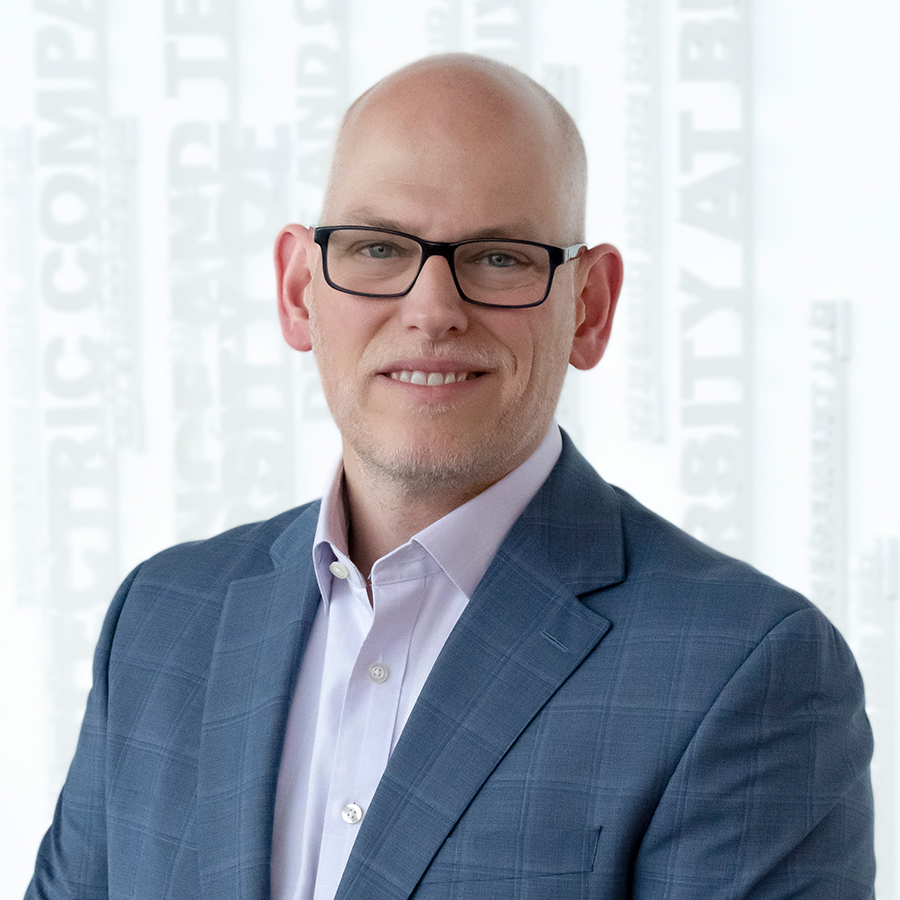
Berardino Baratta
CEO · MxD

Peter Barrett
Founding General Partner · Playground Global

Evan Beard
Co-founder and CEO · Standard Bots

Paul Boulware
Senior Director of Government Solutions · Path Robotics

Jeff Burnstein
President · Association for Advancing Automation (A3)
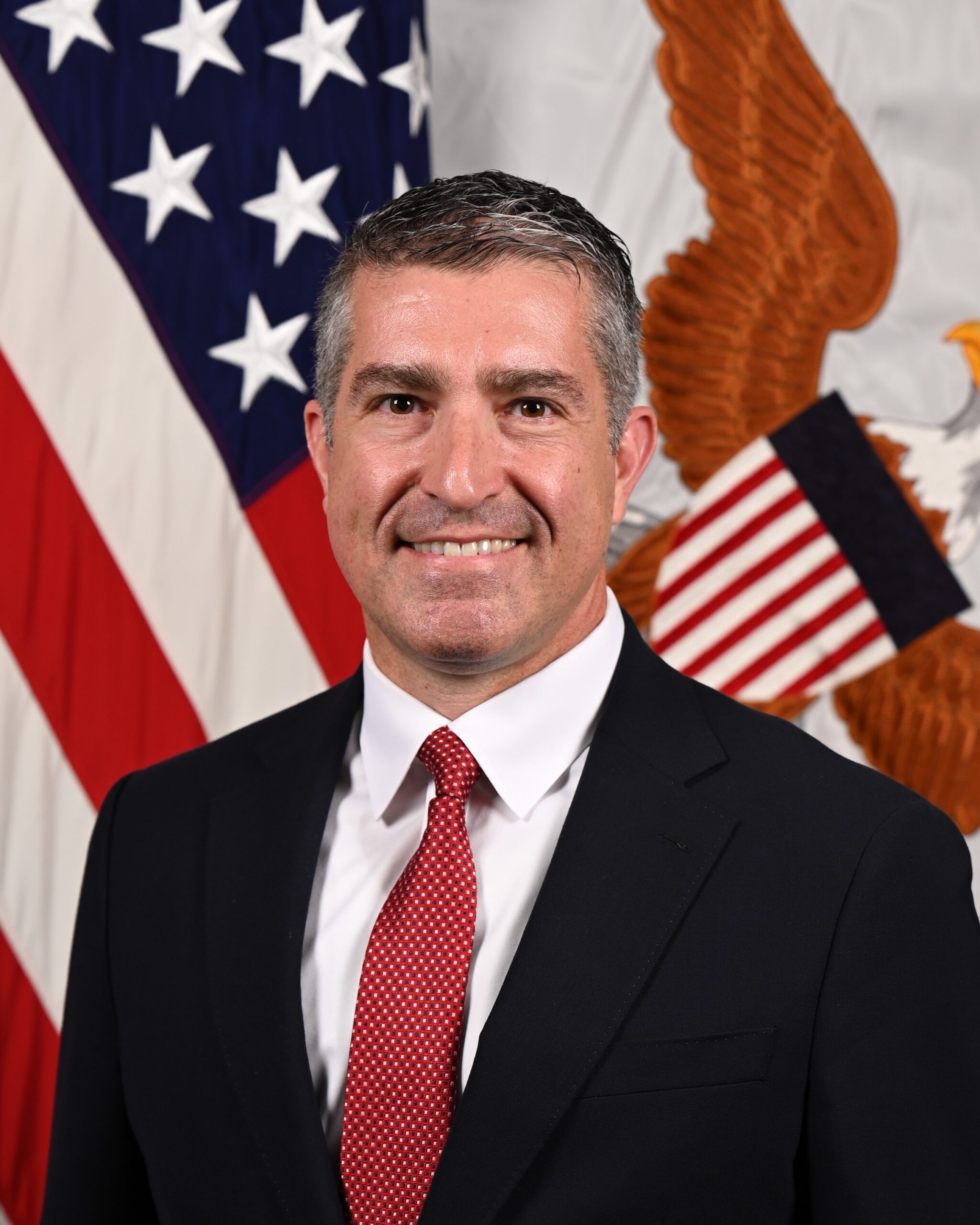
Michael Cadenazzi
Assistant Secretary of War for Industrial Base Policy

Heather Carroll
Chief Revenue Officer · Path Robotics
Mike Cicco
President & CEO · FANUC America Corporation

Dr. Susan Helper
Professor · Case Western Reserve University

Dr. Chinedum Okwudire
Professor & Director of the Advanced Manufacturing Institute · University of Michigan

Dr. Elisabeth Reynolds
Professor of the Practice · Massachusetts Institute of Technology

Michael Robbins
President & CEO · Semiconductor Industry Association (SIA)

Craig Schlenoff, PhD
Chief, Super Intelligence Research, Measurement, and Standards Division; Senior Advisor for Super Intelligence · NIST

Brendan Schulman
Vice President of Policy & Government Relations · Boston Dynamics

Sophie Shulman
Director of Advanced Robotics, Autonomous Vehicles, and Digital Twins · NVIDIA

Chris Stevens
President of U.S. Automation · Siemens

Dr. Dawn Tilbury
Professor & Department Chair of Robotics · University of Michigan

Dr. Pras Velagapudi
Chief Technology Officer · Agility Robotics

Jenn Wall
General Counsel and Head of Government Affairs & Public Policy · Intrinsic

Chris Walti
Co-Founder & CEO · Mytra
Four focus areas
The day moves from the model to the machine to the factory floor, and out to the field.
Adoption at Scale
The business case, operational readiness, and standards needed to move from pilots to broad deployment.
Workforce and Talent
The technicians, integrators, and training pathways needed to deploy and maintain advanced robotics while expanding opportunity for workers.
Capital and Supply Chains
The financing, components, and production capacity required to build robotics systems at volume in the United States.
National Security and Strategy
A national approach to robotics across strategic industries and the defense industrial base.
Who is this for?
The people deciding what America builds, funds, and fields.
AI is moving into the physical world.
Join a community working to ensure the United States builds, fields, and governs the machines that will define the next decade of competition.
Berardino Baratta is an accomplished leader in technology and advancing manufacturing, with more than 25 years of experience in the industry. As the CEO of MxD, the digital manufacturing and cybersecurity institute, Berardino works with the U.S. Department of Defense and a network of over 350 members to drive economic prosperity and support national security by increasing U.S. manufacturing competitiveness.
Through MxD’s diverse array of projects and partnerships, Berardino oversees critical efforts to enhance digital readiness and cybersecurity across the manufacturing sector, prepare the workforce for the advanced manufacturing jobs of the future, and ensure resilient and secure supply chains in an era of increased geopolitical disruption.
Berardino’s diverse experience includes recent roles as Vice President of Projects and Engineering and Sr. Director of Technology Strategy for MxD. Prior to joining MxD, Berardino was CEO of Potentia Analytics, an AI healthcare startup, and held multiple positions at Freescale, including General Manager of Freescale Semiconductor’s Multimedia Applications Division. He began his career with Metrowerks Corporation, a leading provider of Software Development tools, where he led engineering through its growth from startup through acquisition by Motorola Corporation. Berardino received his Bachelor of Mechanical Engineering (Honours) from McGill University.
Peter Barrett is best known today as co-founder and general partner of Playground Global. He believes the computing revolution—and arguably even the industrial revolution—hasn’t happened yet. He is drawn to the toughest challenges at the boundaries of deep tech and hard science.
Peter has been writing software since he was a teenager. At 19, his first security program caught the attention of the NSA. From his first company, Rocket Science Games, he’s had an adventurous career in technology from creating the first widely used video code in the early 90s, building the world’s most popular IPTV platform at Microsoft, cloud intelligence for automotive at CloudCar, and now quantum and optical computing, robotics and artificial intelligence at Playground. He holds over 100 patents.
At Playground, Peter delights in the opportunity to deeply collaborate with entrepreneurs and help create transformative companies with multigenerational impact. He thrives on technologies that lie somewhere between improbable and impossible and companies whose success will help move civilization forward.
Evan Beard is co-founder, CEO and Chief Engineer of Standard Bots, America's largest manufacturer of AI-native industrial robots. The company builds the full-stack in-house — hardware, software, and AI — designing almost all its own parts, including its own actuators, and assembling every robot in Glen Cove, New York with plans to manufacture everything from metal in to robots out in America by the end of 2027. Evan founded Standard Bots on a simple premise: the country that builds the robots of the future will build everything in the future. Standard Bots' mission is to put advanced, affordable robots in the hands of American manufacturers and rebuild domestic industrial capacity at scale. He is a prominent advocate for a coordinated U.S. approach to robotics, testifying twice before Congress for a national robotics strategy. He graduated with honors from Duke University, where he studied Economics and Computer Science.
Jeff Burnstein is the President of the Association for Advancing Automation (A3), the leading North American trade group representing over 1450 global companies involved in robotics, artificial intelligence, vision, motion control and related automation technologies. Burnstein joined the association in 1983 and has held a variety of senior positions, culminating in his promotion to President in 2007. He is a frequent commentator on automation issues to the news media, policy makers and the public, and regularly speaks at global conferences on topics such the latest automation trends, the impact of automation on jobs and the future of automation beyond the factory floor. In 2023 he received the Engelberger Robotics Award for Leadership, widely considered the “Nobel Prize of Robotics.”
Heather Carroll is the chief revenue officer at Path Robotics, where she leads the company’s commercial strategy and works with customers and partners to advance the use of physical AI in manufacturing. Her work sits at the intersection of technology, policy and industrial transformation, with a focus on how AI-driven automation can strengthen supply chains, rebuild industrial capacity and support long-term competitiveness.
Before joining Path Robotics in 2024, Heather served as chief executive officer at Takeoff Technologies and as chief revenue officer at Covariant. She also held senior leadership roles at Dematic. Across more than two decades in industrial automation, robotics and supply chain systems, she has worked closely with global manufacturers and logistics providers to deploy technology that addresses complex operational challenges.
Heather is known for her ability to connect emerging technologies to the practical realities of industrial operations. She is a frequent speaker on the role of physical AI in addressing workforce shortages in welding and regularly engages with policymakers.
She is one of 14 commissioners on the SCSP National Security Commission on Robotics for Advanced Manufacturing chaired by Senator Burr and Senator Slotkin working on a National Framework for Robotics and AI. Heather has been an industry advisor speaking to the Congressional Robotics Caucus as they are working on legislation to advance the adoption of a national framework for robotics and has spent time in Washington participating in roundtables with the Department of Commerce, the State Department and the Council on Foreign Relations advocating for policies and raising awareness of the challenges facing mid-size manufacturers in re-industrializing our base.
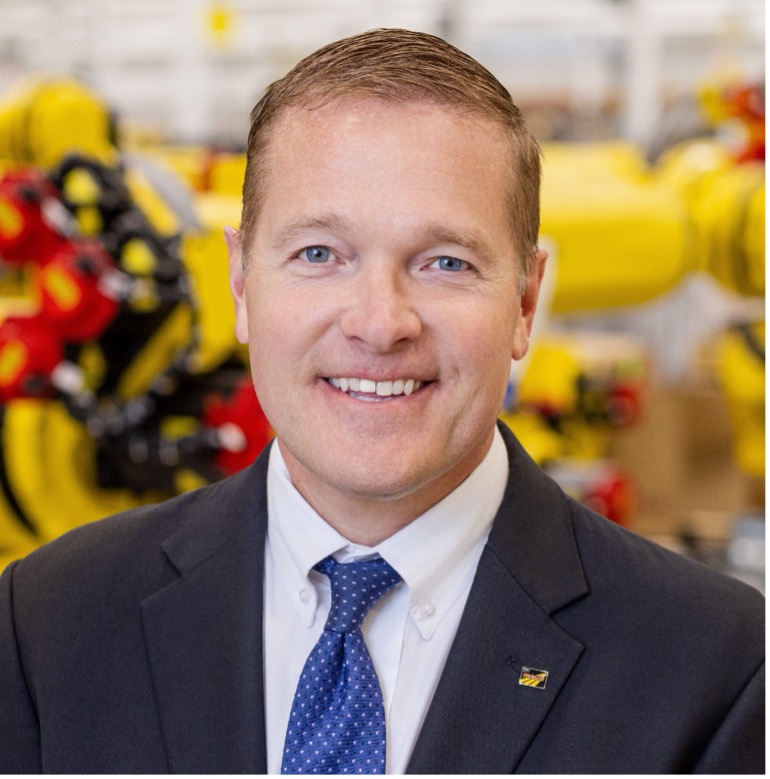
Mike Cicco is the President and Chief Executive Officer (CEO) of FANUC America Corporation. As President and CEO, Cicco has responsibility for all the company’s operations in North and South America.
He also serves as a member of the Board of Directors of FANUC CORPORATION (Japan).
Cicco joined FANUC in 1999 and has held a variety of management positions over the years including software/controls manager and district sales manager at the company’s Southern California facility. In 2005, Cicco transferred to FANUC America’s headquarters in Rochester Hills, Mich., to take on the role of national account manager of the company’s Authorized System Integrator sales group.
As his career progressed, he was named general manager of several robot division groups including Material Handling Engineering, Authorized System Integrator sales, and Domestic Automotive/Michigan Regional sales. In 2015, Cicco was promoted to vice president of FANUC’s North and South American sales and execution. In April 2016, Cicco was named President and CEO.
Before joining FANUC, Cicco served as lead automation engineer for Northrop Grumman in the Automation and Information Systems group.
Cicco holds a Bachelor of Science degree in Electrical Engineering from Bucknell University in Lewisburg, PA. In addition, he is Chairman of the Board for the Association for Manufacturing Technology (AMT).
Chinedum (Chi) Okwudire is a Professor of Mechanical Engineering and Director of the University of Michigan Advanced Manufacturing Institute (UMAMI). His research focuses on leveraging knowledge at the intersection of machine design, control, and computing to improve the performance of manufacturing automation systems at low cost. Chi has received several awards, including the NSF CAREER Award, the International Symposium on Flexible Automation Young Investigator Award, the SME Outstanding Young Manufacturing Engineer and Education Awards, the SAE Ralph Teetor Educational Award, and the Russell Severance Springer Visiting Professorship from UC Berkeley. In 2022, SME named him one of its 25 leaders transforming manufacturing. He has co-authored several award-winning papers in manufacturing automation, control, and mechatronics. He is also Founder and CEO of Ulendo Technologies, Inc., a startup developing automation software for advanced manufacturing.
Dawn M. Tilbury is the inaugural Ronald D. and Regina C. McNeil Department Chair of Robotics at the University of Michigan, and the Herrick Professor of Engineering. She received the B.S. degree in Electrical Engineering from the University of Minnesota, and the M.S. and Ph.D. degrees in Electrical Engineering and Computer Sciences from the University of California, Berkeley. Her research interests lie broadly in the area of control systems, including applications to robotics and manufacturing systems. From 2017 to 2021, she was the Assistant Director for Engineering at the National Science Foundation while maintaining her position at the University of Michigan. She has published more than 200 articles in refereed journals and conference proceedings. She is a Fellow of ASME, IFAC, and IEEE, a Life Member of SWE, and a Member of the US National Academy of Engineering.
Jenn Wall is the General Counsel and Head of Government Affairs & Public Policy at Intrinsic, an AI robotics group at Google. She leads the legal and policy departments, responsible for all related aspects of the business, including corporate governance, risk management, product counseling, commercial transactions, employment, board governance, public policy and government relations. She serves as Corporate Secretary for Foxconn Intrinsic Intelligent Factories, a joint venture between Intrinsic and Foxconn and oversees the company's international subsidiaries.
Prior to Intrinsic, Jenn was a key legal advisor at X, the moonshot factory, where she advised numerous early stage technology projects – including Wing, Waymo and Verily – on their path to becoming Alphabet companies. Jenn also served as X’s Head of Litigation. Her expertise was instrumental in helping X's innovative technology projects reach commercial viability. Before joining X, she was at Hewlett Packard, where she advised supply chain teams. This experience provides valuable insights into manufacturing and supply chain dynamics. Jenn began her legal career as a litigator at Morgan Lewis, focusing on general commercial business litigation. She holds a J.D. from the University of San Francisco School of Law and a B.A. in Political Science from UCLA.
In addition to her legal career, Jenn is an engaged community leader with a proven ability to navigate complex public policy and governance issues. She serves on the Woodside Town Council, including a term as Mayor in 2024.
Craig Schlenoff, PhD, leads NIST’s Super Intelligence Research, Measurement, and Standards Division and serves as Senior Advisor for Super Intelligence in its Information Technology Laboratory. He advises NIST leadership on emerging developments and opportunities to support U.S. industry’s innovation in super intelligence.
His previous roles include NIST Acting Deputy Associate Director of Laboratory Programs and Director of the Networking and Information Technology Research and Development National Coordination Office. At NIST, he has also led research programs on manufacturing robotics, robotic agility, and embodied AI. His research spans knowledge representation, intention recognition, and the evaluation of autonomous systems and industrial robots.
He holds a doctorate in computer science from the University of Burgundy, France, a master’s in mechanical engineering from Rensselaer Polytechnic Institute, and a bachelor’s in mechanical engineering from the University of Maryland.
Brendan Schulman is the Vice President of Policy & Government Relations for Boston Dynamics, the global leader in developing and deploying robots equipped with advanced mobility, dexterity, and intelligence. In this role, he collaborates with policymakers and stakeholders on a wide range of public policy issues relating to the integration of beneficial robots into society. Previously, Brendan was a prominent leader on the development of legislation, regulations, and safety technologies concerning uncrewed aircraft systems (commercial drones), playing a key role in solutions at the federal, state and local levels, as well as internationally. A technology advocate, thought-leader, and champion of pragmatic solutions to the concerns that are raised by emerging technologies, Brendan has served on federal and state policy advisory committees, testified in the U.S. Congress and the U.K. House of Commons, lectures frequently, and is often quoted in the media on technology law and policy.
Sophie Shulman is the Director of Advanced Robotics, Autonomous Vehicles, and Digital Twins at NVIDIA. She previously served in several roles at the U.S. Department of Transportation, including as Acting Administrator of the National Highway Traffic Safety Administration (NHTSA) and Acting Assistant Secretary for Research & Technology. Her experience in mobility technology includes creating the Office of Innovative Mobility at the Colorado Department of Transportation, and leading partnerships and business development at Electrify America, an EV charging company. Earlier in her career, she served at the U.S. Department of Energy, the Office of Management & Budget, and the White House Domestic Policy Council. Sophie received an M.A. from the Johns Hopkins School of Advanced International Studies (SAIS) and a B.A. from Johns Hopkins University.
Velagapudi joined Agility Robotics in May 2023, bringing decades of experience that makes him singularly qualified to lead Agility’s product and technology roadmap. Holding a Master’s and a Ph.D. in Robotics from Carnegie Mellon University, Velagapudi bridges advanced academic research with large-scale commercial reality.
Prior to Agility, as a distinguished expert in robotics planning and control, he was a VP of Engineering and Chief Architect at Berkshire Grey developing bin-picking and AMR solutions. Velagapudi has a proven track record of creating and deploying robotic fleets in the most challenging and diverse environments—from complex industrial to outdoor settings, including fielding subterranean pipe-inspection robot platforms at RedZone Robotics, and co-founding Platypus, which deploys low-cost autonomous boats to collect environmental data on bodies of water.
In a landscape that is constantly disrupted by new technology, Velagapudi focuses on pragmatic product-relevant innovations: driving the vision and strategy for Agility’s Digit, operationalizing AI R&D efforts, and continually exploring what’s new.
The Honorable Michael Cadenazzi was sworn in as the Assistant Secretary of War for Industrial Base Policy (ASW(IBP)) on September 23, 2025. In this role, he is the principal advisor to the Under Secretary of War for Acquisition and Sustainment on industrial base policies and leads the Department of War's efforts to develop and maintain the U.S. defense industrial base to ensure a secure supply of materials critical to national security.
Over the past two decades, Mr. Cadenazzi has served as a serial entrepreneur and consultant with experience in managing and addressing challenging issues across the aerospace & defense sector. He has launched multiple defense industry services and technology start-ups across the signals intelligence, program analysis, data analytics, and market assessment and strategy sectors, and executed two successful transfers of business ownership. His extensive sector experience includes work from the space to undersea domains and from aircraft and munitions to armor, weapons, ships, and services. His clients have included domestic and international firms from large prime contractors to all levels in the supply chain. His direct experience spans strategy, mergers & acquisitions, operations, supply chain and organizational transformation.
Prior to his civilian career, Mr. Cadenazzi served for ten years as an active-duty U.S. Navy cryptologic warfare officer. He completed the Cryptologic Division Office Course at Corry Station in Pensacola Florida before his first tour at Naval Communications & Telecommunications Area Master Station (NCTAMS) WESTPAC in Agana, Guam. Following graduate education, he was assigned to the staff of Commander, U.S. Navy SIXTH Fleet in Gaeta Italy. He completed his military service on the staff of U.S. Naval Forces Europe in London, the United Kingdom.
Mr. Cadenazzi holds a bachelor’s degree in engineering from Tulane University and a master’s degree in electrical engineering with an emphasis on RF communications and signals intelligence from the U.S. Naval Postgraduate School. He was commissioned an ensign in 1995 through the Tulane Naval Reserve Officer Corps (NROTC) program.
Chris Stevens is President of U.S. Automation for Siemens Digital Industries, leading the organization’s strategy, growth, and transformation across all automation sectors in the United States. In this role, Chris drives innovation, operational excellence, and customer success, ensuring Siemens remains the trusted partner for manufacturers and industrial clients nationwide.
His leadership is defined by a relentless focus on solving customer challenges, accelerating digital transformation, and fostering a culture of excellence and responsiveness. Chris champions Siemens’ commitment to delivering cutting-edge solutions that empower customers to thrive in a rapidly evolving industrial landscape.
Chris is a leading national voice on the integration of industrial software and automation, and the unique ability of that combination to create new sources of customer value – faster and more scalably than traditional siloed approaches. His leading-edge perspectives on AI-powered workforce enablement and the untapped transformative power of manufacturing data make him a sought-after speaker at industry gatherings.
He began his career as a sales and program manager in automotive assembly and testing equipment. He later joined Siemens’ industrial software business, where he held positions of increasing responsibility over more than 20 years, ultimately serving as Vice President of strategic verticals. Chris then moved into the US Automation business, where he now serves as its president.
He holds a Bachelor’s Degree in Mechanical Engineering from Michigan State University.
Chris and his wife reside in the Detroit metro area with their three children, with whom he enjoys every available moment outside of work.
Michael Robbins is President & Chief Executive Officer at the Semiconductor Industry Association (SIA), the voice of the U.S. semiconductor industry. He leads the association’s work to advance policies that strengthen American semiconductor leadership, innovation, manufacturing, trusted supply chains, and long-term global competitiveness. Michael is also presently serving as an Officer in the United States Navy Reserve, currently serving on The Joint Staff at the Pentagon.
Robbins previously served as President & CEO of the Association for Uncrewed Vehicle Systems International (AUVSI), the trade association for uncrewed systems, robotics, and autonomous technologies, representing companies in both the commercial and defense sectors. Before joining AUVSI, Michael co-founded a business consulting firm, Intrepid, and served as its Chief Operating Officer. Prior to starting Intrepid, Michael was Managing Director of Government and Public Affairs at the Air Line Pilot Association, International (ALPA) where he oversaw the aviation safety and security, government affairs, and communications departments. Before ALPA, Michael spent a decade working for the late U.S. Congressman John D. Dingell (Michigan), where he served as the Chief of Staff.
Michael has served on numerous federal and private-sector boards, advisory committees, and working groups focused on aviation, cybersecurity, autonomy, and national security. These included the MITRE Corporation’s Aviation Advisory Committee, the Federal Aviation Administration’s Aviation Cybersecurity Aviation Rulemaking Committee, and the National Advanced Mobility Consortium’s Board of Directors. He also served as co-chair of the FAA’s UAS Detection and Mitigation Aviation Rulemaking Committee, as a member of the U.S. Department of Transportation’s Aviation Supply Chain Risk Task Force, and CISA’s Critical Infrastructure Partnership Advisory Council sUAS Security Working Group.
Michael holds a bachelor’s degree from the University of Michigan and a master’s degree from Georgetown University.
Elisabeth B. Reynolds is Professor of the Practice in the MIT Department of Urban Studies and Planning. She was Special Assistant to the President for Manufacturing and Economic Development at the National Economic Council (2021-2022), where she helped lead the Administration’s work on national manufacturing strategy, supply chain resilience, and industrial strategy. Before working at the NEC, Reynolds was a principal research scientist and executive director of the MIT Industrial Performance Center (2010-2021), an interdisciplinary research center focused on systems of innovation and industrial transformation. She also co-led the MIT Task Force on the Work of the Future (2018-2021), which examined the relationship between emerging technologies and work. Reynolds’ work and research focus on innovation ecosystems and manufacturing, including growing innovative firms to scale and digital technology adoption.
She has advised three Massachusetts Governors and consults on manufacturing strategy and policy for several companies, think tanks, and non-profits. She is currently a commissioner on the Special Competitive Studies Project National Security Commission on Robotics for Advanced Manufacturing. She is a co-author of The Work of the Future: Building Better Jobs in the Age of Intelligent Machines and the editor of Priority Technologies: Ensuring US Security and Shared Prosperity, published by MIT Press in April 2026.
Reynolds received her PhD from MIT’s Department of Urban Studies and Planning, her Master’s in Economics from the University of Montreal and her BA from Harvard College.
Susan Helper is the Carlton Professor of Economics at the Weatherhead School of Management at Case Western Reserve University. She served on the White House staff in both the Obama and Biden Administrations, and as Chief Economist of the U.S. Department of Commerce (in the Obama Administration). Her research focuses on the impacts of organization and supply chain structure on innovation, job quality, and sustainability. She is a Research Associate of the National Bureau of Economic Research. She has a BA from Oberlin College and a PhD in Economics from Harvard University.
Chris Walti is co-founder and CEO of Mytra, whose robotics platform makes industrial facilities get better after it's installed. Traditional automation hardcodes its intelligence in steel and peaks on day one. Mytra's platform is software-defined, so it learns, adapts, and improves over time. It starts with material flow, which makes up about 80% of the work in warehousing and 30% in manufacturing. Mytra has a half dozen projects with Tier 1 customers across 3PL, retail, and manufacturing, and has raised $200M across four rounds led by Eclipse, Greenoaks, and Avenir.
Before Mytra, Chris spent seven years at Tesla. He was the founding leader of the Optimus humanoid robot program. In one year he built the team and the first two prototypes, with a walking robot in the first three months. Earlier, he led product for the Supercharger network and then Tesla's mobile robotics team. During the Model 3 ramp, he watched $50M of rigid automation fail, then helped build a working line in 30 days under a tent in a parking lot. That experience became the thesis for Mytra.
Chris holds ten patents in robotics and energy, and degrees from the University of Illinois and MIT.
Paul Boulware is the Sr. Director of Government Solutions at Path Robotics responsible for developing mutually beneficial partnerships between government entities and U.S. manufacturers looking to apply Path's autonomous welding technology. His education and expertise is engineering-based with over 20 years of experience in manufacturing research and product development around welding, robotics, industrial sensors, additive manufacturing, and physical AI. Paul holds nine (9) patents and obtained a Bachelor of Science in Welding Engineer from The Ohio State University in 2006.